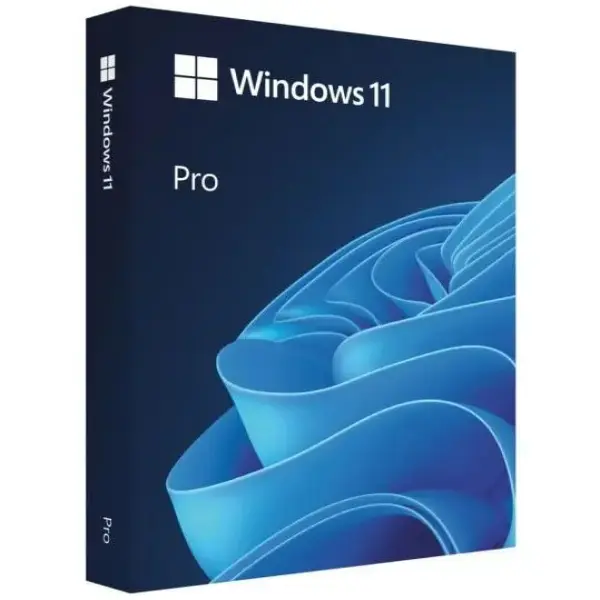
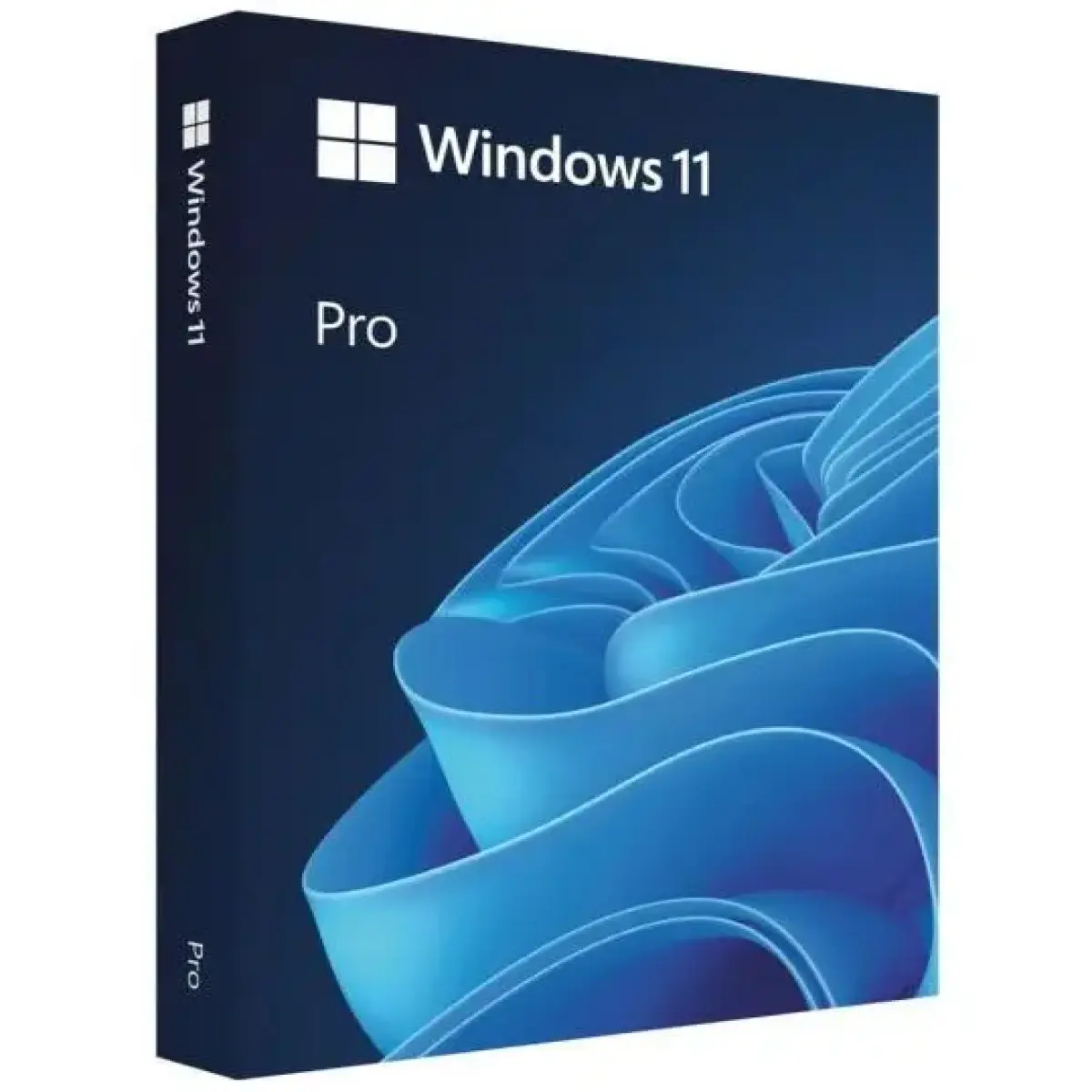
Microsoft Windows 11 Pro 64-bit HUN unused digital licence
| Product number | S-240101-0034 |
| Warranty | warranty-as-per-regulations |
Licence validity period: valid until motherboard replacement
Can be upgraded from Windows 10 Pro -> Windows 11 Pro
Suitable for one-time activation
Can be reinstalled an unlimited number of times
The key becomes invalid if the motherboard is replaced
Cannot be transferred to another device
Continuous update option
NOT suitable for edition upgrade (from Home to Pro)
Microsoft Windows 11 Pro is a modern operating system that offers enterprise-level security and performance. Its licence terms are flexible, enabling administrators to manage systems efficiently while providing users with an optimal experience. Windows Update further simplifies update management, helping you stay up to date at all times.
LEGAL BASIS
LEGAL BASIS FOR USED SOFTWARE IN THE EU
Based on the judgment of the Court of Justice of the European Union (Curia) of 3 July 2012 (C-128/11), the sale of software is permitted even without the physical delivery of a data carrier (CD/DVD/USB drive). Licence keys may be transferred electronically, and the sale of unused software licences and the further transfer of used licences are legal, regardless of whether the software is provided on a data carrier, as a COA or as an electronic licence key. The software manufacturer cannot prevent the resale of its licences and the continued use of its programs, including OEM, Retail and Volume licences, as well as “ESD” versions downloaded from the internet.
The software manufacturer’s copyright relating to the licence is exhausted when the software is first sold and placed on the market (exhaustion of rights). The sale of Volume, commercial and OEM licences, as well as the free trade of electronic licences, is permitted within the territory of the European Union (EEA). (C-128/11, ECLI:EU:C:2012:407, EU 2001/29/EC, 28, 2009/24/EC)
Article 5(1) of Directive 2009/24 states that, in the absence of specific contractual provisions, the reproduction of a computer program does not require the permission of the program’s author if such reproduction is necessary for the lawful acquirer to use the computer program in accordance with its intended purpose, including error correction.
Since the copyright holder may not oppose the resale of a copy of a computer program for which the distribution right has been exhausted under Article 4(2) of Directive 2009/24, it must be established that the second acquirer of that copy, as well as all subsequent acquirers, are considered “lawful acquirers” within the meaning of Article 5(1) of Directive 2009/24.
Court of Justice of the European Union
Open press release No. 94/12.
Luxembourg, 3 July 2012 (official source: curia.europa.eu)
“In today’s judgment, the Court states that the principle of exhaustion of the distribution right applies not only where the right holder markets copies of the program on a material medium such as a CD-ROM or DVD, but also where the copy is distributed by downloading it from the right holder’s website.”
“Where the copyright holder makes available to his customer a copy of a computer program, whether tangible or intangible, and at the same time concludes a licence agreement granting the customer the right to use that copy for an unlimited period in return for payment of a fee, the copyright holder sells that copy and exhausts his exclusive distribution right. Such a transaction involves the transfer of ownership of the copy. Consequently, the right holder can no longer object to the resale of that copy, even if the licence agreement prohibits further transfer.”
Used or second-hand software refers to cases where the user licence entitlement for the software originates from a previous end user and is not placed on the market directly through the manufacturer’s or distributor’s commercial channels.
“Second-hand” or “re-marketing” software is largely reintroduced to the market as used licences from European company liquidations, site closures, asset disposals, new software purchases, and licences separated from faulty or dismantled computers. Based on the judgment of the Court of Justice of the European Union of 3 July 2012 (C-128/11), software manufacturers may not prohibit the resale of used or unused software licences, even if the EULA prohibits this or the related programs were downloaded from the internet by the user.
The software manufacturer’s copyright is exhausted upon the first sale (exhaustion of rights), meaning that the manufacturer can no longer prevent further sale and use if the software has already been placed on the market. If the copyright holder sells a copy of the program and grants the user the right to use it, the distribution right is exhausted.
GERMAN FEDERAL COURT OF JUSTICE (BGH)
As expected, on 11 December 2014 the German Federal Court of Justice (BGH) also ruled that where a buyer has purchased licences under a discounted volume agreement allowing multiple copies of the given software to be used, the resale of Volume licences is permitted, provided that the corresponding copies have been rendered unusable (deleted) by the original purchaser, or where the licence had not been used in the first place.
The BGH decision of 11 December 2014:
“The resale of software copies downloaded from the copyright holder’s website does not require the subsequent purchaser to receive a physical data carrier containing the used copy of the computer program; it is sufficient for the subsequent purchaser to download a copy of the program from the copyright holder’s website.”
It was once again confirmed that customers do not need to fear the software manufacturer in connection with the purchase and use of used software. According to the Münster Public Procurement Chamber, claims for injunctions or damages related to the use of software based on secondary usage rights are no longer objectively understandable in light of the highest court decisions of the CJEU and the BGH. Furthermore, the BGH stated that there was no evidence of financial loss suffered by the software manufacturer.
Used licences do not differ in any way from new licences, and used software cannot be distinguished from new software.
Both the judgment of the Court of Justice of the European Union and the BGH decision are final.
LAWS AND DIRECTIVES APPLICABLE TO THE TRANSFER
Judgment of the Court of Justice of the European Union, 2012, C-128/11. (Exhaustion of distribution rights, concept of lawful acquirer.)
European Parliament Directives 2009/24/EC and 2001/29/EC. (On the legal protection of computer programs.)
EU Regulation 910/2014 and Government Decree 137/2016 (13 June). (Rules on digital authentication.)
ITM Government Decree 1/2018 (29 June). (Rules on digital archiving.)
DIRECTIVE 2009/24/EC OF THE EUROPEAN PARLIAMENT AND OF THE COUNCIL
“Legal protection of computer programs – Marketing of used computer programs downloaded from the internet – Directive 2009/24/EC – Article 4(2) and Article 5(1) – Exhaustion of the distribution right – Concept of lawful acquirer”
On those grounds, the Court (Grand Chamber) ruled as follows:
1) “Article 4(2) of Directive 2009/24/EC of the European Parliament and of the Council of 23 April 2009 on the legal protection of computer programs must be interpreted as meaning that the distribution right of a copy of a computer program is exhausted where the copyright holder, who has authorised, even free of charge, the downloading of that copy from the internet onto a data carrier, has also granted, in return for payment of a fee corresponding to the economic value of that copy, a right to use that copy for an unlimited period.”
2) “Article 4(2) and Article 5(1) of Directive 2009/24 must be interpreted as meaning that, in the event of the resale of a user licence, which involves the resale of a copy of a computer program downloaded from the copyright holder’s website, where that licence was originally granted by the copyright holder to the first acquirer for an unlimited period and in return for payment of a fee corresponding to the economic value of that copy, the second acquirer of the licence, as well as any subsequent acquirer, may rely on the exhaustion of the distribution right under Article 4(2) of that directive and may therefore be regarded as lawful acquirers within the meaning of Article 5(1) of that directive, who benefit from the right of reproduction provided for in that latter provision.”
OFFICIAL SOURCES, INFORMATION
EU InfoCuria (C-128/11): open - Court judgment
EUR-Lex: open - Directive 001/29/EC
EUR-Lex: open - Directive 2009/24/EC
Federal Court of Justice decision: open - BGH
Government decree: EU Regulation 910/2014 and Government Decree 137/2016 (13 June)
EU Curia: open - Press release No. 94/12
Customer Reviews
No review has been published yet...